Knowledge hub
We measure blood pressure and cholesterol. Why not mental load?
HRV and medical-grade ECG provide objective insights into strain and recovery. Not a diagnosis, but a starting point for an earlier conversation.

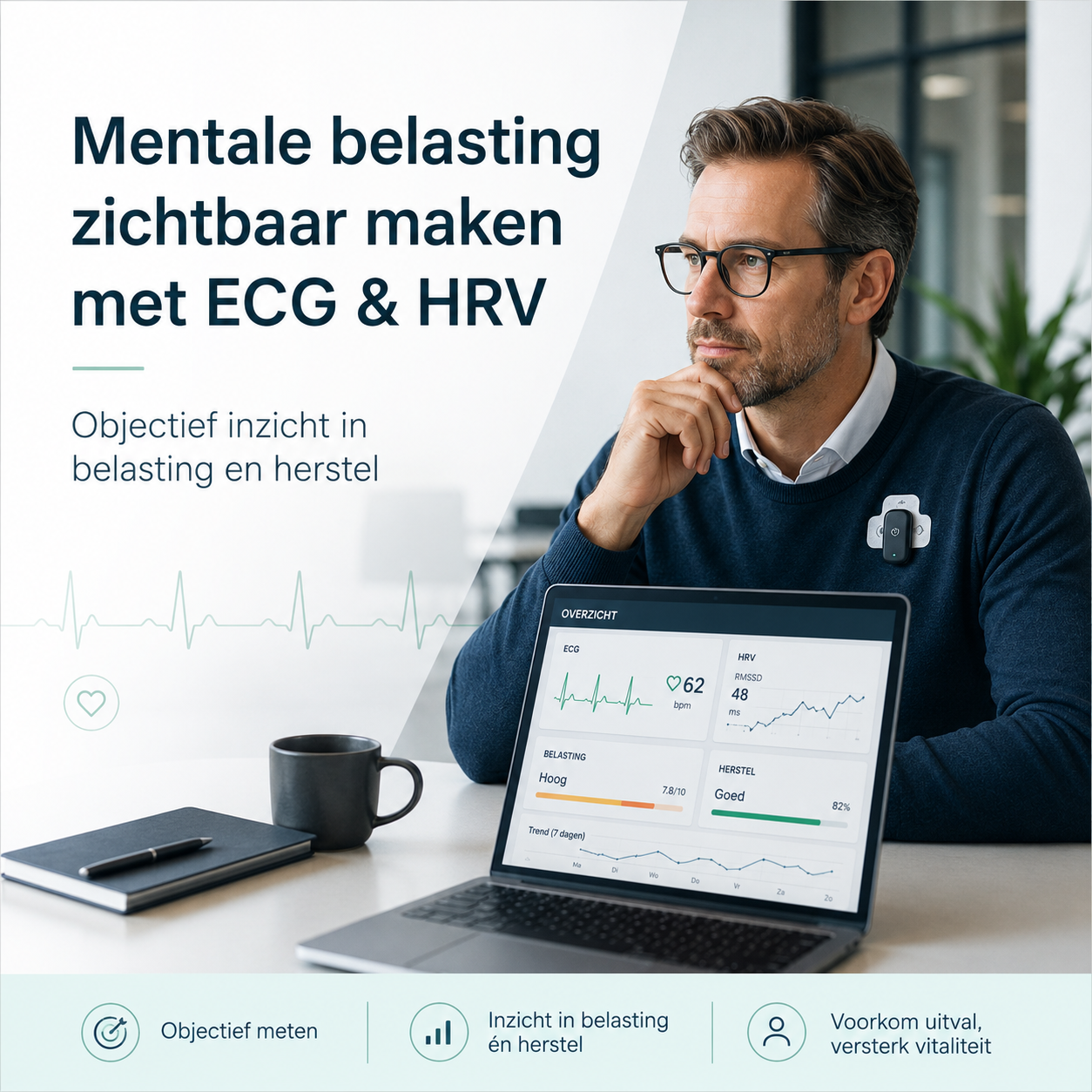
We measure blood pressure. Cholesterol. Heart rate. But mental load? We often wait to address it until someone indicates they can no longer cope. Meanwhile, the body often emits warning signs much earlier.
HRV: what does it actually measure?
A multi-day ECG measurement can be used to monitor Heart Rate Variability (HRV): the variation in time between consecutive heartbeats. HRV provides insight into how the autonomic nervous system responds to strain and recovery—not just during working hours, but throughout the entire day and night.
This creates a much more complete picture
- How does the body react to strain?
- When does actual recovery take place?
- Is there sufficient recovery during the night?
- What is the balance between strain and recovery over several days?
- Are there patterns that provide a reason to start a conversation sooner?
No diagnosis, but context
An ECG or HRV measurement does not, of course, provide a psychological diagnosis. Furthermore, HRV is not a direct measure of stress, burnout, or mental health. The results can be influenced by multiple factors, such as sleep, physical fitness, illness, medication, and lifestyle. Therefore, HRV must always be interpreted within the context of an individual’s situation and in combination with personal dialogue and other information.
The power of objective information
The measurement can, however, add objective data to what an individual experiences and reports themselves. That is where the strength of this approach lies.
Why should we wait until someone reaches a breaking point regarding their mental health, when we can look at signs of persistent strain and insufficient recovery earlier? Earlier insight provides the opportunity for earlier action. That is exactly what prevention is all about.
Keep reading
Prevention · 10 September 2026
In the news today: what happens at home does not stay at home
Research by MKB-Nederland and ArboNed shows that personal circumstances play a major role in sick leave. What does that mean for employers?
Prevention · 4 September 2026
Can you measure yourself awake?
When your sleep score matters more than how you feel. On orthosomnia, wearables and the difference between measuring for insight and chasing a perfect number.